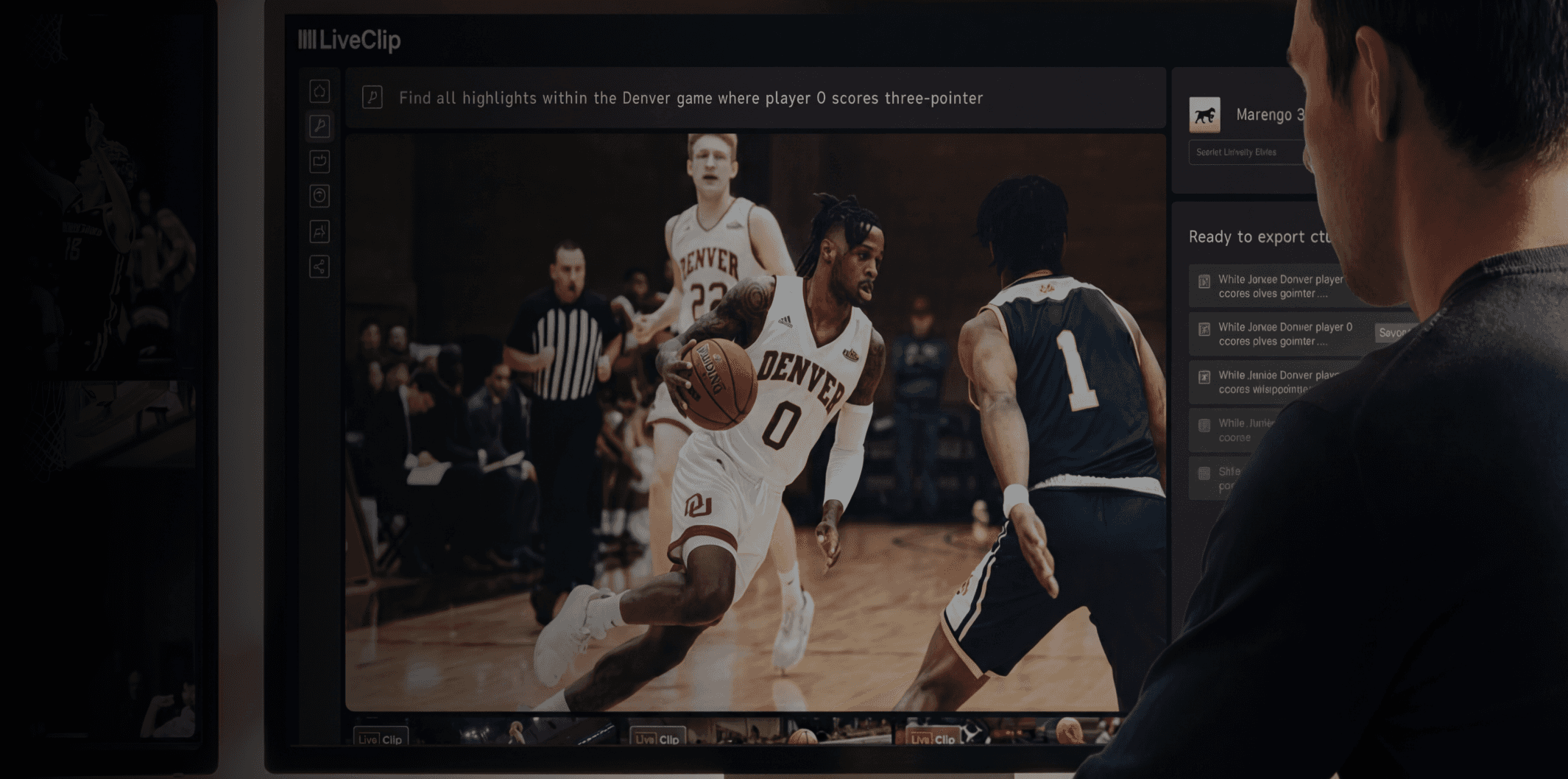
TwelveLabs released Pegasus 1.6 on October 6 with support for first-person video, native image analysis and improved entity recognition. Its explicit target includes footage from wearable cameras and teleoperated systems used to build physical-AI datasets. This is a model-building story before it is a robotics deployment story: the company wants to make recorded experience easier to label, inspect and turn into training material. The release announcement sets out those changes.
A new perspective changes the labeling problem
A fixed camera observes a scene from outside. A wearable camera moves with the person performing the task. Hands can obscure objects, the viewpoint can change abruptly and important events may happen near the edge of the frame. Describing that footage usefully requires more than recognizing an object in an isolated image. The label must connect an action to its timing and context.
The technical documentation lists action labeling, review of robotics footage, timestamped events and next-action prediction among the intended uses. These are stated capabilities and use cases, not proof of a measured improvement in a downstream robot policy. That distinction should define the buyer’s experiment.
The label is a teaching decision
Our analysis is that automated annotation changes who defines the curriculum. Suppose a recording shows a worker reaching for a component, withdrawing after a slip, and then securing it with a second grip. A summary saying “the worker picks up the component” may be true but insufficient. If recovery is the capability being trained, the omitted event is the most valuable part.
This is why a data team should specify the annotation granularity before purchasing bulk processing. Does it need task names, hand-object interactions, failures, state transitions or precise timing? Different model objectives require different labels. A useful service should preserve uncertainty when the event is obscured, rather than manufacture a confident description merely to complete the schema.
The business case is correction effort
Automated first passes can be valuable even when they are imperfect. The relevant comparison is how much expert effort remains after generation. A fast pipeline that produces subtle mistakes can be harder to supervise than a slower one that clearly flags ambiguity. In a training corpus, the most damaging errors may be systematic rather than numerous: reversing left and right, confusing an attempted action with a completed one, or skipping failed attempts.
An evaluation could give reviewers a blinded mixture of human and machine annotations from the same footage. Measure correction time, disagreement and missed consequential events. Then train a small controlled model comparison on the corrected outputs. This separates savings in annotation labor from the stronger claim that the data improve learning. It is a proposed test, not an experiment performed by this publication.
Descriptions are not motor commands
A text label can identify that a hand tightened a cap without specifying the torque required. Video can leave contact forces and hidden geometry unresolved. TwelveLabs’ place in the stack is therefore best understood as preparing and interpreting observations. A robot-learning team still has to combine that material with the action representation, sensors and training process appropriate to its machine.
This boundary is commercially useful. A supplier does not need to solve end-to-end robotics to provide valuable data infrastructure. It needs to improve a measurable step that model developers would otherwise perform themselves. The danger is pricing the service against an imagined fully automated pipeline while humans still perform extensive reconciliation downstream.
Integration details affect scale
The migration guide says batch analysis remains on Pegasus 1.5. Teams should not assume every existing high-volume workflow immediately gains the new model’s behavior. The same guide describes incomplete segment outputs as an explicit state to handle. A data pipeline must recognize missing annotations before treating an output as complete.
The October release is worth watching because it targets a specific bottleneck rather than promising general intelligence. Its strongest possible result would be evidence that teams can curate more diverse footage at lower total cost while maintaining label quality. Until that evidence is available, the right purchase is a bounded evaluation against real recordings, not confidence borrowed from a polished demonstration.
The evidence to watch
Look for publicly described downstream training gains, error rates on obscured actions, expert correction time and reliable handling of incomplete outputs. Those measures determine whether video understanding becomes useful data production.
References
Questions, news tips or corrections? Contact info@frontieraireview.com.