OpenAI’s October 6 research collaboration with Ironclad puts a concrete business problem inside frontier-model development: can an agent configure a contracting workflow without losing the rules that make it useful? The reported improvement is substantial, but its meaning depends on the unit being measured. A higher average score is evidence of progress, not proof that the entire job can be delegated. OpenAI’s research release.
A workflow becomes a model-development test
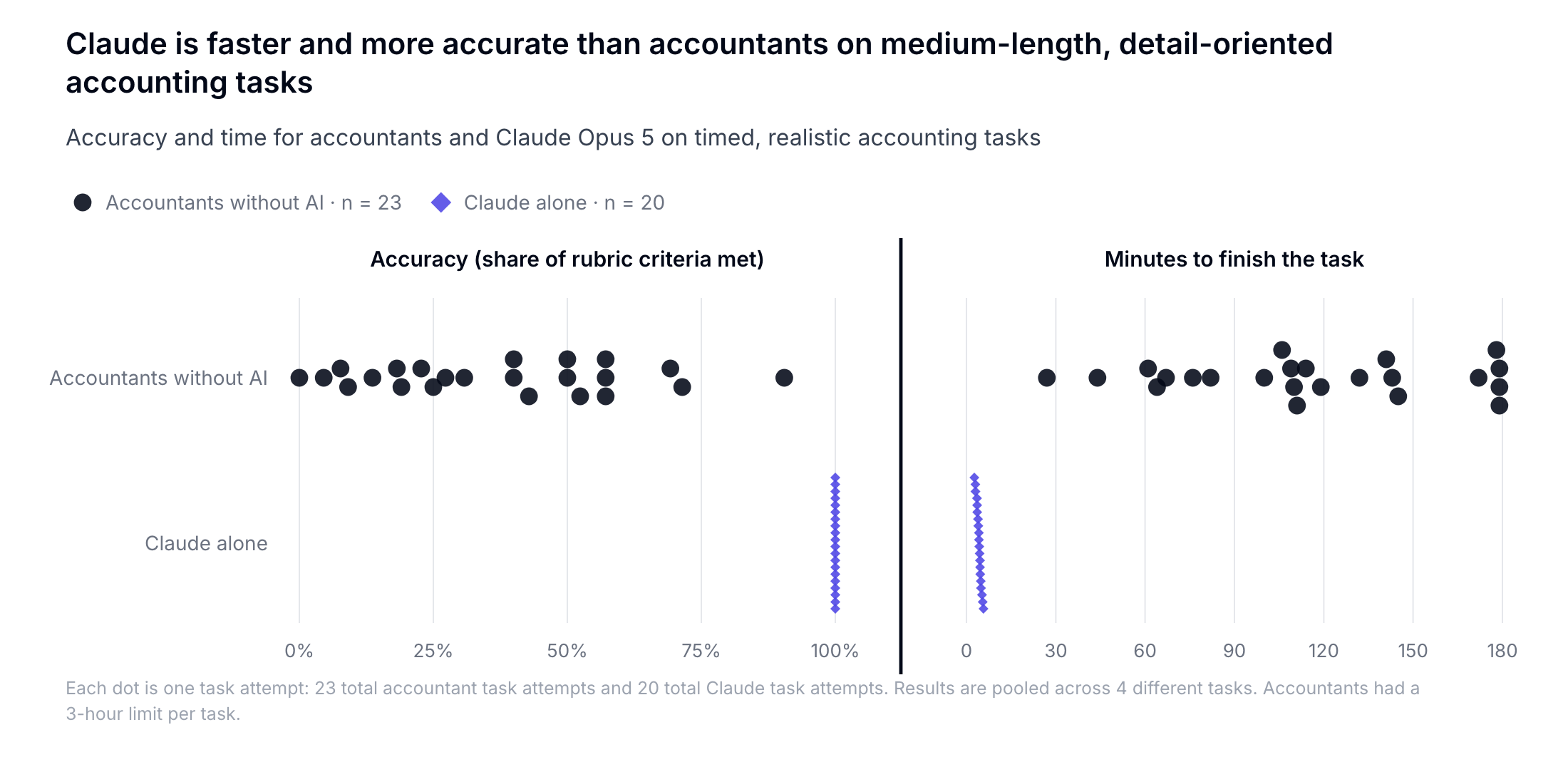
The companies assembled 11 research tasks with 8 to 50 grading criteria apiece. OpenAI reports a mean score of 55.0% for GPT-6 Astra, versus 41.6% for GPT-5.6 Sol. The models used different reasoning settings. Estimated time fell from 37.0 to 19.2 minutes per attempt; these are simulated estimates, not measured customer savings. Ironclad supplied hosted environments, while synthetic training tasks drew on filtered public SEC contracts rather than private customer contracts.
Those qualifications make the finding more useful. The experiment exposes where a model improves inside a bounded environment. It does not establish general reliability across contracting systems, nor does a score averaged over requirements tell a customer how many workflows were completely correct.
The missing condition can outweigh the completed ones
Ironclad’s own approval-configuration documentation describes conditional role assignments and rules for when approvers enter a workflow. Those controls explain why a sequence of successful clicks is not enough: the resulting configuration must preserve who reviews which request.
Consider an illustrative purchasing workflow with a polished form, correct document generation, and a spending threshold that routes expensive requests to the wrong approver. Most visible work could look finished. Yet the routing mistake might invalidate the process for the organization that commissioned it. Counting every criterion equally would be helpful for diagnosing progress but insufficient for deciding whether to activate that workflow.
This suggests a second score beside ordinary rubric credit: the proportion of attempts that satisfy every mandatory condition. A third could measure how reliably the agent discovers its own critical errors before handing work back. These measures answer different questions. Researchers need to know whether competence is increasing; users need to know whether a specific delegation is safe to accept.
For model builders, the distinction changes the training target. Rewarding completed interface actions can encourage visible progress. Rewarding an independently verified end state asks whether the actions preserved the underlying rules. The latter may require tests that exercise alternative paths through a workflow rather than merely inspecting the screen the agent leaves behind.
Domain knowledge becomes an evaluation asset
The strategic implication is that software companies can contribute something a generic task collection cannot easily capture: an explicit definition of acceptable work in their domain. That is our inference from the collaboration, not a reported commercial agreement. Knowing which exception makes an answer unusable can be more valuable to a training experiment than simply supplying another example of a successful interaction.
But that advantage depends on transfer. A model that improves on familiar task templates may still fail when a customer changes the approval hierarchy or names the same concept differently. Evaluation should therefore include held-out organizations, unfamiliar configurations, and combinations of rules absent from training. Otherwise the test risks measuring fluency in one implementation instead of reusable business reasoning.
The cost calculation starts after generation
A faster attempt saves little if a specialist must reconstruct the entire workflow to approve it. Conversely, even a partially autonomous model may be economically useful if it produces verifiable work that sharply reduces review time. The useful comparison includes creation, inspection, correction, and the cost of re-running a failed attempt. It should be measured under the same acceptance standard for both model and human workflows.
This is why the next benchmark improvement should make failure easier to locate, not merely less frequent. A clear trace of which requirements were checked, what evidence was observed, and where uncertainty remains can make human review more targeted. That trace must itself be tested: a persuasive checklist is not independent evidence that the checks occurred.
The evidence to watch
Watch for whole-task acceptance rates, critical-rule failures, independent tests on unfamiliar configurations, and measured review time. Those results would show whether gains in a research rubric translate into a larger share of work a business can actually delegate.
References
Questions, news tips or corrections? Contact info@frontieraireview.com.